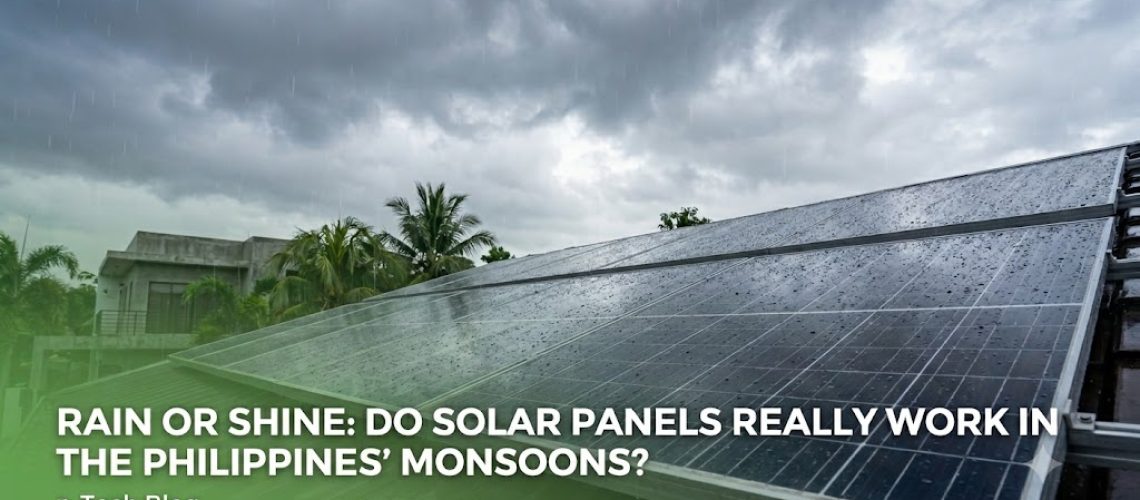
It is one of the most common questions homeowners ask before making the switch to renewable energy: “What happens to my solar panels during the rainy season?” Living in Philippines, we are no strangers to the contrast of blistering summer heat and heavy monsoon downpours. It’s completely natural to worry that weeks of gray skies and rain might leave your home in the dark or cause your electric bills to spike right back up.
Here is the good news: Your solar panels don’t go on vacation when the rain starts. In fact, the rainy season comes with a few hidden perks for solar energy efficiency that might surprise you.
The Science of Rain and Solar Energy: Light vs. Heat
A common misconception is that solar panels need hot, direct sunlight to generate electricity. In reality, solar panels rely on photovoltaic cells that capture light, not heat.
Even when heavy storm clouds roll over the Philippines, sunlight still penetrates the cloud cover.
-
Reduced, But Still Producing: On a heavily overcast or rainy day, solar panels generally operate at about 10% to 25% of their peak efficiency.
-
The Bright Side of Gray Skies: While output is lower than on a crystal-clear April afternoon, your system continuously generates power throughout the day to help offset your household energy consumption.
The Hidden Blessing: Nature’s Free Cleaning Service
Did you know that dust, pollen, and airborne pollution can create a thin film over your solar panels, subtly dropping their efficiency over time?
In a way, the rainy season is exactly what your solar investment needs. Heavy downpours act as a free, automated cleaning service. Rain washes away accumulated grime and debris from the glass surface. Once the clouds break and the sun peeks out again, your perfectly clean panels will actually operate at a higher peak efficiency than they did before the rain!
How to Stay Fully Powered Through the Monsoons
While the rainy season won’t shut your system down, smart engineering ensures you never have to worry about power instability or sudden brownouts.
1. Leverage Premium Battery Storage
The absolute best way to weatherproof your energy independence is by pairing your system with an Energy Storage System. Excess electricity generated during peak sunny intervals is saved in high-capacity batteries. When a storm rolls in or a local cooperative grid goes down, your critical appliances keep running smoothly day or night.
2. Take Advantage of Net Metering
If your system is tied to the local grid (like Meralco), any excess power you generate during sunny days can be fed back into the cooperative grid. This earns you credits that seamlessly offset the energy you pull from the grid during extended periods of heavy overcast weather.
Real Savings, Year-Round
At n-Tech, our custom-engineered systems are built specifically to withstand the unique climate of the Philippines. Our clients across Nueva Ecija routinely report 50% to 80% reductions on their monthly electric bills when evaluated on an annual basis. The abundant sunshine of the Philippines during the dry months more than compensates for the lower production during the monsoons.
Pro Tip: Want to ensure your system is structurally and electronically ready for the next tropical storm? Our local expert technicians provide comprehensive Repair & Maintenance services, including safety inspections and thorough system check-ups.
Ready to Secure Your Energy Independence?
Don’t let rising utility rates or seasonal weather dictate your electricity costs. Whether you are looking for a compact 3kW household setup or a robust commercial system, we engineer solar solutions that deliver long-term financial returns—come rain or shine.
-
Explore our flexible options on our Pricing Page.
-
Ready for a custom quote? Contact our expert engineering team today for a free consultation.